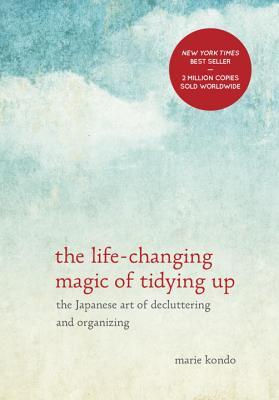
While I tend not to read many books on the bestseller list, I was intrigued by a lot of what I was hearing about Marie Kondo's The Life-Changing Magic of Tidying Up. I read it in just a few short days, and in large part it lived up to the hype. Yet I had two criticisms of the book, the first of which was that the idea of speaking to your possessions, including thanking items you are about to part with for their role in your life, seems like a bit of nonsense. Kondo believes that one's possessions have energy, and sending positive energy their way will result in your belongings supporting you in turn. She even, she writes, greets her home verbally at the end of the day. If it works for her, and for her clients, I cannot object to it, but it would feel strange in my own life.
The larger criticism is that, while I appreciate her advocacy of decreasing clutter and being more mindful about your things, she barely touches on stemming the inflow of new possessions. Towards the end of the book, she indicates that if you truly tidy up, keeping only that which gives you joy (the core of her recommendation), you will be less inclined to add more. But earlier on, she glosses over the shame of having bought something you never used, writing that the joy of acquiring was what mattered. This seems a terribly wasteful sentiment, a carte blanche apology that will allow more of the same in the future. After all, if the pleasure of acquiring is what matters, surely the question of whether the new bauble will bring you joy is secondary, in Kondo's estimation?
While I certainly enjoyed and appreciated what Kondo had to say (and was inspired to clean out a number of desk drawers in the process), I'm just as much bothered by what the intense popularity of this work has to say about us. Have we really been so overwhelmed with stuff that a book on organizing sold over a half-million copies? Of course, in a society where we can never escape from the all-powerful presence of advertisements, where we live in an economy driven by consumption, the answer is yes. We've responded powerfully to both of these factors, combined with our own innate drive to possess things. The average size of our homes has more than doubled since 1983, and even that wasn't enough, as self-storage has grown to become a multi-billion dollar industry, to store all the things we think we need but can't fit in our homes.
Every single holiday has become another opportunity for companies to try and sell us even more stuff, from Easter and Columbus Day, to special sales for Memorial and Presidents' Days, all the way up to the extravaganza of greed that the holiday season has turned into. When is it enough?
Marie Kondo is right in asserting that holding on to things that we don't need makes us unhappy. But buying more stuff that we don't really need is bad for us too, personally and financially. Constantly buying and discarding things we never really needed is bad for the planet, representing a waste of resources that could have been put to better use. I support being more mindful about what we own--as long as it's paired with being more mindful about the inflow of things. If we don't do that, then all the paring down of possessions and discarding is for almost nothing, a task we'll be doomed to repeat forever, like Sisyphus on his hill.
Comments
Post a Comment