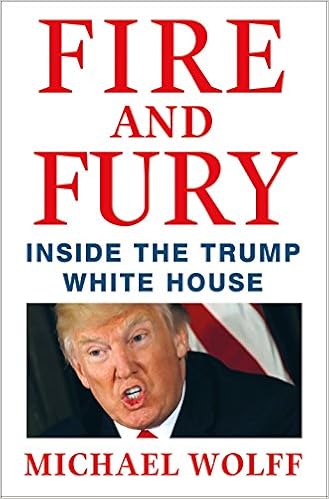
Since the week before it was to be published, Michael Wolff's Fire and Fury: Inside the Trump White House has been, by far, the most-talked about book in the country. The furor, prompted by an angry denunciation-by-tweet from the President, a cease and desist letter from his lawyers, and salacious details from the book making their way into the press, immediately catapulted it to bestseller status. Being a political junkie, of course I couldn't resist giving it a read. While the book sold out almost immediately in print, I was lucky enough to borrow the digital audiobook from my local public library. I rushed through it in just a few days - not only because of how engrossing it was, but also knowing that there were a lot of people waiting to read it after I was done.
As enjoyable a read as Fire and Fury was, the deep irony of the book is that it would likely have received little attention had it not been for the attacks by the Trump Administration. In attempting to stop the book, they instead gave Wolff the best gift an author could hope for - masses of free publicity. The reality of the book is that there isn't a lot that's new here, at least in the big picture. Wolff portrays the President as a man deeply set in his ways, uninterested in the basic functions of his job, and quite out of his depth. He didn't even want to win, as far as that went. The campaign was meant to bolster his own personal brand and, if Wolff is to be believed, position him to launch a television network that would compete with Fox News. This is, essentially, a narrative that you didn't have to read this book to be familiar with.
Some of the particular anecdotes of the work make for interesting reading, but details of what Wolff relates have come under fire as possibly inaccurate. There is also a definite shift partway into the book. While the story begins broadly told, gradually we're left mostly with Steve Bannon's point of view. The reader might not be wrong to suspect that towards the end of his research, the former chief strategist for the President was almost the only source still talking. This makes the last part of the work less interesting as a result - less about Trump than it is about Bannon. Wolff seemingly gives him too much credit as a political operator, and Bannon's apparent inability to stop himself from talking led shortly to his ouster from Breitbart. Bannon's rapid fall after the book's publication marks a curious coda to a curious career.
If you can get your hands on a copy, you'll likely find it was worth your time. But if not, Fire and Fury is surely just the first of many inside looks at a chaotic time in the Executive Branch.
Comments
Post a Comment